Unmasking Success

Unmasking success can feel scary and not just in a creepy, Halloween way.  Halloween is the one day a year we’re encouraged to dress up, play pretend, and step into someone else’s shoes. But what about the other 364 days? As professionals, leaders, and even coaches, we often wear invisible costumes—roles, personas, and expectations that shape how we show up in the world. Some empower us. Others conceal who we really are.

Performing and Authenticity

In coaching, we talk a lot about authenticity. Yet many of us are so used to performing—being the “perfect leader,” the “always-available parent,” the “fearless entrepreneur”—that we forget we’re wearing a mask. These identities may have served us at one point, but over time, they can become confining. Like a costume that’s too tight or too heavy, they limit our movement, our voice, and our growth.

Halloween offers a playful metaphor for exploring this. When we choose a costume, we ask: Who do I want to be tonight? What part of myself do I want to amplify or escape? That same curiosity can be applied to our everyday lives. What roles am I playing out of habit? What expectations am I trying to meet that no longer align with my values?

Unmasking Success

Unmasking success means getting honest about what we’re hiding behind—and why. It means asking ourselves: Am I leading from a place of truth, or from a place of performance? Am I chasing goals that reflect my deepest desires, or ones that were handed to me by someone else?

Here are a few coaching prompts to help you reflect this Halloween:

  • What “costume” do I wear most often in my professional life?
  • What am I afraid people will see if I take it off?
  • What part of myself have I been keeping hidden?
  • What would it feel like to show up as my full, unfiltered self?

This isn’t about abandoning professionalism or structure. It’s about aligning your outer expression with your inner truth. When we lead from authenticity, we build trust, connection, and impact. We stop performing and start transforming.

Unmasking is Liberating

And just like Halloween, unmasking success can be fun. It can be liberating. It can be the beginning of a new chapter—one where you define success on your own terms. So today, as you help your kids into their costumes or scroll through social media admiring clever disguises, take a moment to reflect: What mask are you ready to take off? What truth are you ready to step into? Because the real magic isn’t in who you pretend to be—it’s in who you’re becoming when you stop pretending. Happy Halloween—and here’s to unmasking success by showing up, as you are, and unapologetic.  Reach out if you want to chat more about how to unmask and bring more of your authentic self to your life.
A Story of Bold Transitions

Do you have the courage to make bold transitions in your life?  If so check out this episode of Success Your Own Way!

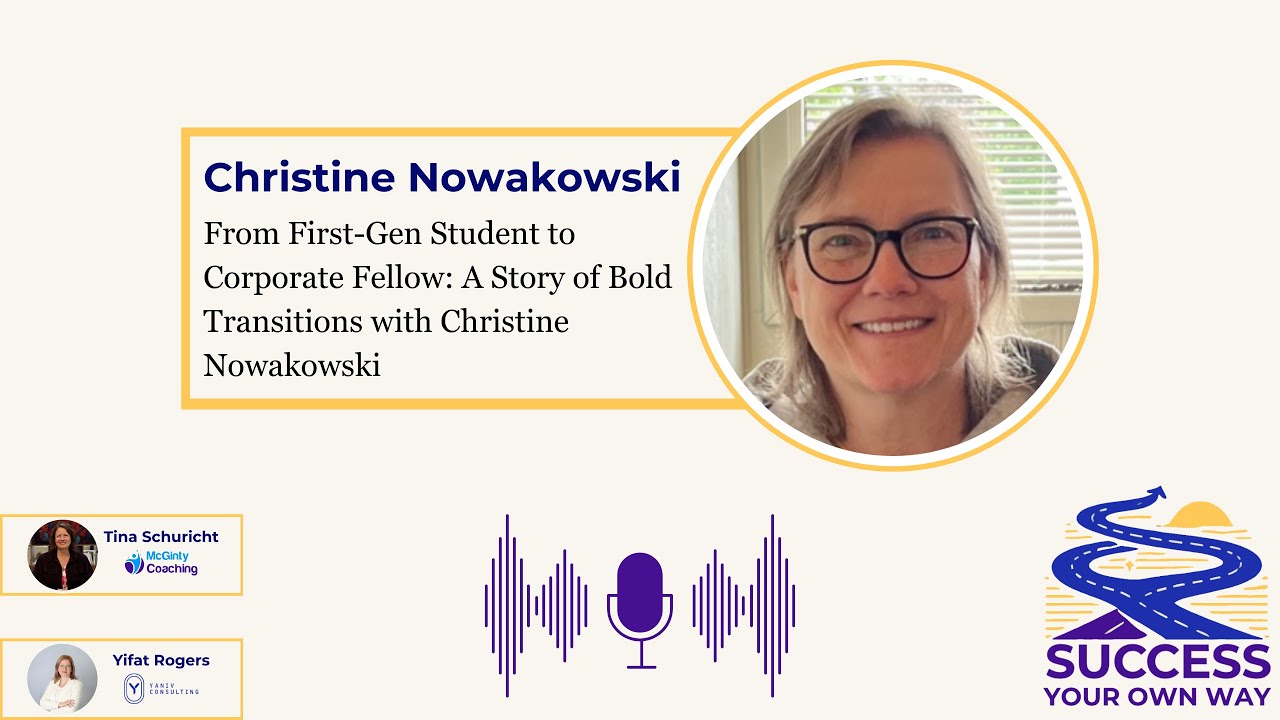
From First-Gen Student to Corporate Fellow: A Story of Bold Transitions with Christine Nowakowski

In this inspiring episode, Dr. Christine Nowakowski—Corporate Fellow at Cargill and one of General Mills’ most prolific female inventors—shares her unconventional journey through science, leadership, and mentorship. With 25+ years in food science and over 100 patents, her work shaped staples like Fiber One and Nature Valley.

A first-generation college student inspired by Star Trek, Christine navigated 12 years without a promotion, ultimately redefining success through curiosity, resilience, and interdisciplinary learning. Her leap from General Mills to Cargill led to her earning the prestigious title of Corporate Fellow. Christine reflects on mentorship, imposter syndrome, and the pressure to conform—especially as a woman in male-dominated spaces.

She shares practical tools from her work with veterans, like Beyond the Military and StrengthsFinder, and the power of simple gestures like saying “thank you.” This episode is a masterclass in reinvention, technical leadership, and the courage to speak up. Tune in for a conversation that will challenge your definition of success and leave you reflecting—with gratitude, boldness, and renewed purpose.

Links to episode

About Christine

Dr. Christine Nowakowski is a Corporate Fellow at Cargill and a distinguished food chemist with over 25 years in the industry. Her leadership at ConAgra, General Mills, and Cargill has driven innovation across science, product development, and consumer satisfaction. With expertise in sugar crystallization, food polymers, salty taste biochemistry, and browning reactions, Christine has authored 100+ patents and publications.

At General Mills, she was one of the top female inventors, earning multiple innovation awards. Her work enabled breakthrough products like Fiber One, Progresso Soup, and Nature Valley, and led sugar and salt reduction efforts that improved flavor while cutting sugar by up to 75% and sodium by over 30%. At Cargill, she leads strategy for indulgent categories like bakery and chocolate, partners with global brands, and bridges industry with academia.

She also co-leads a major European research initiative, securing multimillion-dollar funding and advancing novel ingredients. A passionate educator and mentor, Christine teaches at the University of Minnesota and supports veterans and food entrepreneurs through multiple organizations.

Christine holds a B.S. in Microbiology from the University of Wisconsin–Milwaukee and both an M.S. in Food Science and a Ph.D. in Food Chemistry from the University of Wisconsin–Madison.

Mentorship in Motion: Building Reciprocal Relationships That Last

Mentorship in motion isn’t just a catchy phrase.  The concept of mentorship being in motion refers to the power created by a reciprocal, dynamic, and evolving relationship. Effective mentorship spans generations, career stages, and even industries, forming a web of support, insight, and growth for everyone involved.

Mentorship in Motion

At its core, mentorship is about connection. It’s about seeing and being seen, offering perspective while receiving fresh insight. Whether you’re a seasoned executive or just starting out, mentorship can be a catalyst for transformation—not just professionally, but personally.

One of the most overlooked aspects of mentorship is its fluidity. A mentor doesn’t have to be older, more senior, or even in the same field. Reverse mentorship—where younger professionals share their knowledge of emerging trends, technologies, or cultural shifts—is increasingly valuable. These relationships help leaders stay relevant, curious, and connected to the pulse of change.

Likewise, peer mentorship can be just as impactful. Having someone walk beside you, rather than ahead of you, creates space for vulnerability, shared learning, and mutual accountability. These relationships often evolve into deep friendships rooted in trust and growth.

Finding Mentorship that Lasts
Be Intentional

Start by identifying what you need. Are you seeking strategic guidance, emotional support, or help navigating a transition? Clarity will help you find the right fit—and communicate your needs effectively.

Look Beyond Titles

Mentors can come from unexpected places. A colleague in another department, a former client, or even someone you admire on LinkedIn might be the perfect person to reach out to. Don’t limit yourself to traditional hierarchies.

Ask Thoughtfully

When approaching a potential mentor, be specific. Share why you admire them, what you hope to learn, and how you envision the relationship. A thoughtful ask shows respect for their time and expertise.

Nurture the Relationship

Mentorship isn’t a transaction—it’s a relationship. Show up prepared, follow through on advice, and express gratitude. Check in regularly, even if it’s just a quick note or coffee catch-up.

Be a Mentor Yourself

No matter where you are in your journey, someone can benefit from your perspective. Share your story, offer encouragement, and be generous with your time. You don’t need all the answers—just a willingness to listen and support.

Embrace Evolution

Mentorships shift over time. Some deepen, others fade, and that’s okay. Stay open to new connections and let go of relationships that no longer serve either party.

Mentorship and Interdependence

In a world that often celebrates independence, mentorship reminds us of the power of interdependence. It’s not just about climbing the ladder—it’s about building bridges. When we invest in each other, we create a ripple effect of growth, belonging, and possibility.

Whether you’re seeking guidance or offering it, mentorship in motion is a practice worth cultivating. Because when we lift each other up, we all rise.  Reach out if you want to talk more about how mentorship can help – or how to find one.

Letting Go To Lead

Letting go to lead.  What does that mean for you? Autumn is nature’s quiet invitation to release. As the trees shed their leaves, they remind us that letting go isn’t a loss—it’s a necessary step in renewal. In leadership and life, we often cling to outdated beliefs, roles, or expectations simply because they’ve been with us for so long. But just like the trees, we thrive when we allow what no longer serves us to fall away.

The Power of Letting Go

The metaphor of falling leaves is rich with wisdom. Trees don’t resist the change; they prepare for it. They stop sending energy to what’s no longer needed and redirect it inward, conserving strength for the season ahead. What if we did the same in our professional lives? Could we pause to ask: What am I still holding onto that’s draining my energy? Have our roles, responsibilities, or “shoulds” outlived their purpose?

Many of us carry invisible scripts—expectations handed down by culture, family, or past versions of ourselves. “I should… be further along….want that promotion….be able to do it all.” These scripts often go unquestioned, yet they shape how we lead, how we show up, and how we define success. Autumn invites us to challenge those scripts. To ask: Is this belief still true for me? Is this role still aligned with who I am becoming?

Create Space

Letting go can feel uncomfortable. It may stir up fear, uncertainty, or grief. But it also creates space—for clarity, creativity, and courage. When we release what’s no longer aligned, we make room for what is. We become more intentional, more present, and more powerful in our leadership.

Here are a few ways to embrace the season of shedding:

Reflect with Curiosity

Set aside time to journal or walk in nature. Ask yourself: What am I ready to release? What beliefs or habits feel heavy or outdated?

Name Your “Shoulds”

Write down the expectations you feel pressured to meet. Then sort them into three categories: want, need, and neither. Let go of the ones that no longer reflect your values.

Practice Gentle Detachment

You don’t have to make dramatic changes overnight. Start by loosening your grip—declining one meeting, delegating one task, or saying no to one obligation that doesn’t serve you.

Reclaim Your Energy

Notice where your energy flows. Are you investing in growth, or just maintaining appearances? Redirect your focus toward what fuels you.

Trust the Cycle

Just as trees trust that spring will come, trust that letting go will lead to new beginnings. Leadership isn’t about holding everything—it’s about knowing what to release.

Embrace Change

Autumn teaches us that change doesn’t have to be loud or chaotic. It can be graceful, intentional, and deeply empowering. As you move through this season, consider what you’re ready to let fall. Because in the space that remains, something new can take root—and that’s where true leadership begins.  Reach out if you want to talk more about how to achieve the change you seek.

Authenticity, Advocacy, and Ancestral Strength with Maychee Mua

In this powerful episode of  SuccessYourOwnWay, you’ll meet Maychee Mua, a 2025 Bush Fellow, systems change leader, and first-generation Hmong-Chinese American.  Maychee shares her transformative journey of identity, advocacy, and redefining success. Maychee is navigating cultural duality, discovering her own neurodivergence, pioneering autism policy in Minnesota, and raising neurodivergent children. Maychee’s story is one of resilience, authenticity, and community empowerment. She reflects on proud moments, the impact of mentorship, and the importance of ancestral strength.  She offers heartfelt advice for those seeking their voice and purpose. Her message encourages listeners to embrace nontraditional paths, take courageous risks, and lead with empathy and vision for future generations.

To learn more about the Maychee and the Bush Fellowship, visit: https://www.bushfoundation.org/fellows/maychee-mua/

Links to episode

About Maychee

Maychee Mua’s identity is woven through multiple roles—daughter, granddaughter, sibling, wife, and mother to neurodivergent children. Being neurodivergent herself (autistic and has ADHD), these roles have shaped her life experience, worldview, and leadership style.  Maychee is a first-generation Hmong Chinese American and the daughter of refugee parents.  She channels her ancestral legacy of resilience into systems change.

Maychee was one of the first people who worked with a team to implement Minnesota’s Medicaid autism program for children under 21 in 2015. She has built trust across diverse communities and dismantled systemic barriers with empathy, persistence and cultural insight. Additionally, she helped the State of Minnesota create its first cultural competency training for autism providers, created multilingual educational materials, and elevated the voices of autistic individuals and families.

As a 2025 Bush Fellowship Recipient, Maychee is deepening her leadership by reconnecting with her cultural roots, building a holistic healing framework, and designing culturally tailored resources that bridge Southeast Asian traditions with Western systems of care.

To learn more or connect with Maychee: www.linkedin.com/in/mmua 

Parenting in the Fast Lane

Parenting in the Fast Lane.  What does that mean and what does it have to do with coaching? Let me explain.  Parenting is a journey I have been on for over a decade – both enjoying and contemplating how to do it better.  One summer day, I was driving kids to their camps, and it got me thinking about the parallels between parenting and driving. Specifically driving on a busy highway—trying to keep up with traffic while still adhering to the speed limit. It’s a delicate balance between momentum and restraint, between external pressures and internal principles. Just like driving, parenting demands constant vigilance, quick decision-making, and the ability to adapt to changing conditions—all while staying true to your values.

Societal Pressures on Parenting

Have you been in the situation where you’ve been merging onto a freeway where everyone seems to be going 15 miles over the posted limit? If so, you may feel the pressure to accelerate, to match the pace, or else you become a hazard or get left behind. In parenting, this is similar to the societal race of milestones: early reading, competitive sports, advanced placement classes, curated social media profiles. The pressure to keep up with other families—whether it’s the neighbor’s child who speaks three languages or the Instagram-perfect birthday party—can be overwhelming. You don’t want your child to fall behind, but you also don’t want to lose control.

Interpreting Your Values in Context

The speed limit, in this metaphor, represents your core parenting values. It’s the boundary you set based on what you believe is safe, healthy, and right for your child. Maybe you value unstructured play over scheduled activities, or emotional intelligence over academic accolades. Sticking to the speed limit means honoring those values, even when the world around you seems to be speeding ahead. It’s resisting the urge to over-schedule, over-discipline, or over-achieve in the name of keeping up.

But here’s the catch: driving too slowly can be just as dangerous as speeding. In parenting, this translates to being too rigid, too disconnected from the realities your child faces. If you ignore the pace of the world entirely, your child might struggle to integrate socially or feel unprepared for life’s demands. So, you adjust—not by abandoning your values, but by interpreting them in context. You might allow more screen time during a tough school week or support a competitive pursuit if it aligns with your child’s passion.

The Importance of Flexibility

Parenting, like driving, is full of unpredictable moments: sudden stops, detours, road rage, and breakdowns. You learn to anticipate, to read the signs, to know when to accelerate and when to ease off. You teach your child to navigate their own road, not by racing ahead, but by understanding the rules, respecting others, and trusting their own judgment.

Steering with Intention

Ultimately, parenting in the fast lane reminds us that parenting isn’t about winning a race—it’s about arriving safely, together. It’s about being present in the journey, not just focused on the destination. You may not always match the speed of traffic, but if you stay aware, stay grounded, and stay connected to your child, you’ll find your rhythm. And in that rhythm, there’s grace, growth, and the quiet joy of knowing you’re steering with intention. Believe it or not, coaching can help you steer with intention – whether that steering is focused on your career, your family, or any decision or change you are navigating.  Reach out if you want to talk more about how coaching can help you see through the fog of life and steer with intention.